Lederhosen Store Blog
Let’s Talk About: Traditional German Clothing
Dec
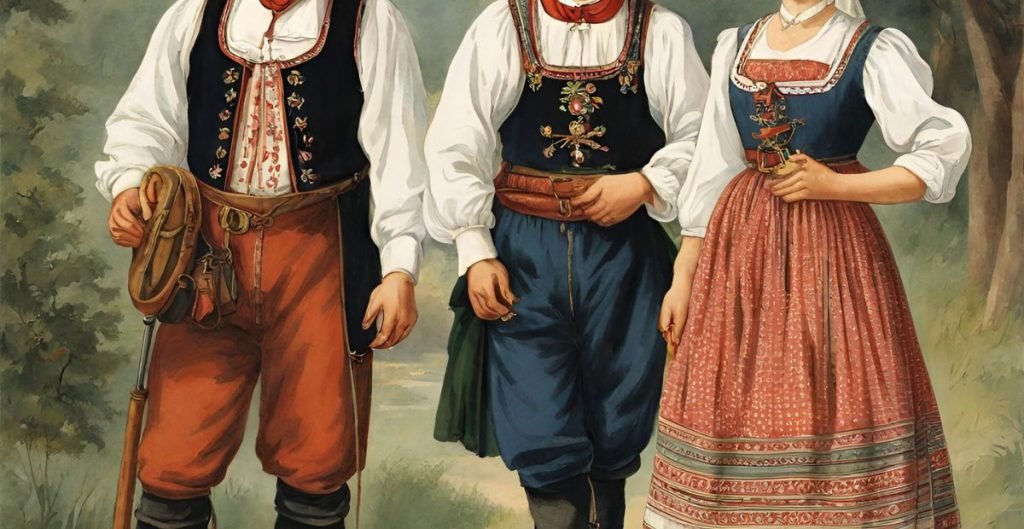
Traditional dress is influenced by local customs, climate, and cultural history, leading to a wide variety of regional costumes rather than a single national attire. Historically and culturally, Germany is influenced by a clothing type called ‘Tracht.’ The word is widely associated with Bavarian, Austrian, and South Tyrolean garments like Lederhosen and Dirndl but only vaguely references to the actual tracht. You’ll find German traditional clothing for females and males in the heart of Germany’s history.
It’s like a time machine, whisking us away to a world where life moves at a different pace. Every stitch and thread in traditional German clothing tells a story. These outfits are not mere dresses but living testaments to a bygone era. They serve as a portal into Germany’s history, culture, and the resilience of its people. As a well-worn book holds the echoes of the stories it has told, traditional German outfits are repositories of the past.
What does the Word Tracht Mean?
“Tracht” is a German term that originates from the verb “tragen,” meaning “to carry or wear.” Therefore, Tracht means “what is worn.” This term typically refers to the traditional clothing associated with specific ethnic groups (Volkstracht), social classes, or occupations (Arbeitstracht).
Traditionally, Tracht includes clothing that represents cultural heritage and identity. For example, in Bavaria and Austria, Tracht often refers to outfits like lederhosen for men and dirndl for women, worn during cultural events such as Oktoberfest. These garments are not just costumes but essential symbols of cultural pride and heritage.
Beyond clothing, Tracht can also mean a load or device for carrying loads, such as a bee’s load of honey. It is used in German idioms, like “eine Tracht Prügel,” which translates to “a good beating.”
The History of Tracht and Its Relationship with German Traditional Clothing
The concept of Tracht, traditional folk clothing in German-speaking regions, dates back to the 15th century. Initially, these garments emerged in rural areas, worn by farmers and their wives. They were practical and designed to express the regional, religious, and social status of the person wearing them. Different styles of Tracht varied depending on the wearer’s circumstances, such as festive, everyday, or mourning attire and indicated wealth, professional occupation, or personal status.
Farmers, for example, had two variations of Tracht:
- A less embellished and durable version as workwear attire.
- An intricately embroidered version, used for special occasions like weddings and parties.
Regional Influences and Variations
Folk costumes developed uniquely in different regions, influenced by urban fashions, cultural history, available materials, and even the royal courts and military styles. For example, in Bavaria, men traditionally wore leather breeches called Lederhosen while women donned Dirndls, which consisted of a bodice, blouse, skirt, and apron. Women in Hessen wore black Trachten with colorful needled patterns, while the Huguenots wore even more colorful Trac ht due to their special privileges.
19th Century and the Trachtenbewegung
The 19th century saw a resurgence in the popularity of traditional German clothing, driven by a cultural movement known as Trachtenbewegung. This movement aimed to promote and preserve folk costumes as symbols of national identity. The interest in Tracht was partly a response to the cultural and national humiliations experienced during the Napoleonic Wars. In Bavaria and Austria, royal courts began to embrace and celebrate regional costumes. King Ludwig I of Bavaria played a significant role in this revival by including traditional costume parades at events like Oktoberfest.
As Tracht revived its cultural significance and reached the industrialized cities, it was seen as a symbol of the romantic country lifestyle. The upper class of Bavaria transformed the simple Alpine Dirndl and Lederhosen outfits into a premium clothing style for city men and women. Thus, Lederhosen and Dirndl are not the traditional dress of Germany, but they did play a crucial role in making trachten the Volkstracht.
Different Tracht Customs in Germany
Germany is a patchwork of diverse regions, each with its own distinct history and culture, mirrored in various German clothes. Tracht remains an important cultural symbol, particularly in regions like Bavaria, where it is prominently featured during festivals such as Oktoberfest. While everyday use of Tracht has diminished, this German traditional clothing is still worn during special occasions and cultural events, symbolizing a connection to heritage and regional pride. Modern interpretations and variations of Tracht continue to evolve, blending traditional elements with contemporary fashion.

Friesische Tracht
The Friesische Tracht is a well-known traditional costume in northern Germany, particularly among the Frisian people. This attire is often richly decorated with beads and embroidery, reflecting the women’s wealth and social status.
Finkenwerder Tracht
The Finkenwerder Tracht is specific to the inhabitants of Finkenwerder, an island in the Elbe River. Members of the local folklore group, Finkwarder Speeldeel, wear this traditional garment during cultural performances and festivals. The outfit symbolizes local identity and cultural pride.
Black Forest (Schwarzwald) Tracht
In the southwestern region of Baden, particularly in the Black Forest, Tracht traditions are strong. One of the most iconic elements is that unmarried women from Kirnbach, Gutach, and Reichenbach villages wear the Bollenhut, a wide-brimmed hat adorned with large red pompoms. The Schwarzwälder Trachtenmuseum in Haslach showcases over 100 life-size figures in traditional Black Forest costumes, offering a comprehensive overview of regional attire.
Bavarian Tracht
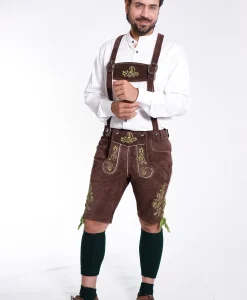
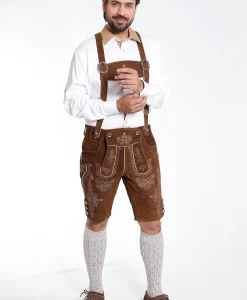
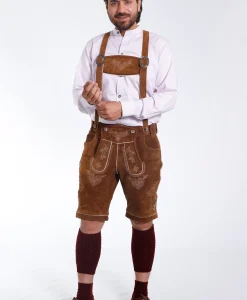
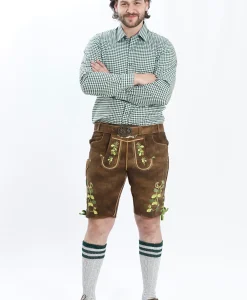
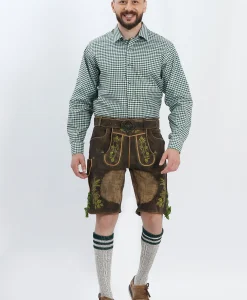
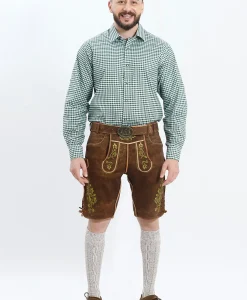
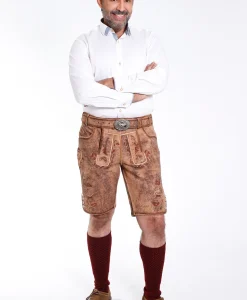
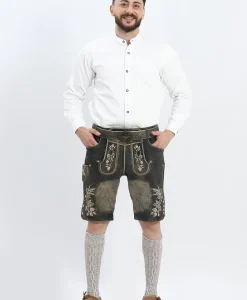
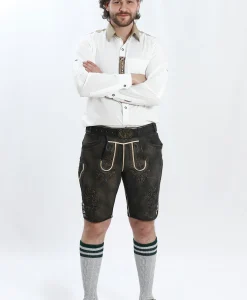
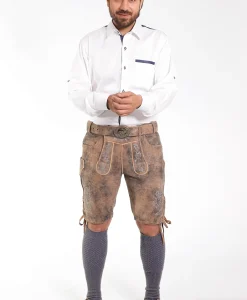
In Bavaria, the Alpine Tracht is the most recognized traditional attire, featuring Lederhosen for men and Dirndl for women. Modern premium Lederhosen are deerskin or goatskin leather trousers topped with intricate hand-embossed embroidery, worn mainly for the annual Bavarian Oktoberfest. The Lederhosen shorts are matched with a formal shirt and matching embroidered suspenders on the upper body, Bavarian shoes (Haferlschuhe) and Bavarian socks (Loferl) on the lower body, and a trachten hat on the head to complete the authentic Bavarian look.
Dirndl is the feminine counterpart of the Bavarian Lederhosen. It consists of a structured bodice, blouse, skirt, and apron, all in multiple designs, colors, and embroideries to complement the look.
Six traditional subtypes of the Alpine Tracht are identified. These are essentially variations of the Lederhosen and Dirndl outfits and vary by the traditions of different Bavarian regions:
- Miesbacher Tracht
- Werdenfelser Tracht
- Inntaler Tracht
- Chiemgauer Tracht
- Berchtesgadener Tracht
- Isarwinkler Tracht
These customs are celebrated in Bavaria and have become symbols of German folk culture globally due to their promotion by Tracht associations and migration.
OKTOBERFEST LEDERHOSEN OUTFITS


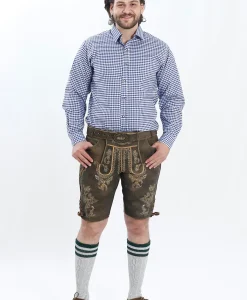
Tips for Wearing Traditional German Clothing
Every German dress has a special meaning rooted in its place of origin. So, whenever you wear a traditional German Tracht, it is essential to understand its symbolism and respect the culture.
Choose the Right Occasion
Tracht is typically worn during cultural events, festivals, weddings, and traditional ceremonies. Wearing Tracht outside these contexts, especially in everyday settings, might seem out of place. For instance, Oktoberfest is a prime occasion to don a Dirndl or Lederhosen.
Pay Attention to Fit and Quality
Buying a poor quality Tracht will be disrespectful to the regional culture and may not be taken lightly by the locals. When purchasing a Tracht, ensure the clothing fits well and is made from high-quality materials. Dirndl, for example, should fit snugly around the bodice in the shape of your waist while Lederhosen should ideally be comfortable, allowing for ease of movement.
Accessorize Appropriately and Follow Traditional Etiquette
Accessories play a crucial role in completing the traditional look. For women, this might include an apron (Dirndlschürze), jewelry, and a hat. Men often wear suspenders (Hosenträger) with their Lederhosen and traditional hats such as the Tiroler or Sepplhut. However, it is important to follow specific etiquette. For example, the placement of a Dirndl’s apron bow indicates a woman’s marital status: tied on the left means single, on the proper means married or taken, and at the back can indicate a widow or a waitress.
Maintain Your Tracht
Proper care is essential to preserving traditional garments. Avoid washing leather Lederhosen at home; spot-clean or wipe them down. For Dirndls, follow the care instructions carefully, as many conventional fabrics require gentle handling or professional cleaning.
Embrace Regional Styles
Each region in Germany has its unique style of Tracht. Embrace the specific characteristics of the area you are representing. For example, the Miesbacher Tracht from Bavaria differs significantly from the Friesische Tracht of Northern Germany.
Be Mindful of Modern Adaptations
While traditional Tracht has a long history, modern adaptations are common. You can blend traditional elements with contemporary fashion, but it’s essential to do so respectfully and authentically. Many Tracht shops like the Lederhosen Store offer modern variations that maintain traditional integrity while fitting current styles.
When and Where Do Germans Wear Traditional Tracht?
Anyone is wrong to think Germans wear Tracht, especially Lederhosen and Dirndl, as regular clothes. According to native Germans, especially northerners, “Imagining Germans in Lederhosen is similar to imagining Americans riding horses and shooting guns while herding cattle.” However, there has indeed been a recent hike in the popularity of Tracht.
The German Tracht has witnessed a revival in the past 20-30 years, especially in Bavaria, due to the surging global popularity of Oktoberfest. Local Bavarians, people from other parts of Germany, and even foreigners prefer wearing traditional Tracht outfits to the Munich Oktoberfest and other Volksfests in the country. Here are other famous German Volksfest where you can find people wearing Trachten:
- Cannstatter Volksfest, Stuttgart.
- Barthelmarkt in Oberstimm near Ingolstadt.
- Bergkirchweih in Erlangen.
- Biberacher Schützenfest in Biberach an der Riss.
Final Words: Wearing Traditional German Clothing
There are two major concepts among the locals and foreigners, one is that Tracht isn’t worn at all and the other is that it is worn as regular clothing. Both are misconceptions that must be cleared. Germany has a modern and developed society where people wear jeans, t-shirts, and suits like the rest of the world. Traditional Tracht like the Bavarian Lederhosen is a cultural touchstone but not a practical daily wear choice.
As the Oktoberfest 2024 season arrives, there has been a surge in demand for authentic Lederhosen and Dirndl outfits among enthusiasts and potential visitors. Lederhosen Store understands modern trends and keeps the classical appeal in mind to create premium-quality deerskin and goatskin Lederhosen that will help you stand out at the upcoming Oktoberfest. Our store offers multiple exclusive deals on Lederhosen Sale and offers the best quality at affordable prices.




Popular Oktoberfest Lederhosen and Accessories
Men’s Black Adler-Design Lederhosen with Suspenders
$159.95Original price was: $159.95.$117.95Current price is: $117.95.Men’s Chocolate Brown Bavarian Lederhosen with Suspenders
Adler Embroidered Brown Lederhosen Shorts for Men
$159.95Original price was: $159.95.$129.95Current price is: $129.95.Timeless White Dirndl Blouse for Oktoberfest
$39.95Original price was: $39.95.$29.95Current price is: $29.95.White Dirndl Blouse with Ruffled Collar
$39.95Original price was: $39.95.$29.95Current price is: $29.95.Black Grace Dirndl Dress
$199.95Original price was: $199.95.$139.95Current price is: $139.95.Black Midnight Elegance Dirndl
$179.95Original price was: $179.95.$139.95Current price is: $139.95.Classic Gray Dirndl – Authentic Otkoberfest Dress
$169.95Original price was: $169.95.$119.95Current price is: $119.95.Luxury Black Silver Midi Dirndl Dress
$159.95Original price was: $159.95.$119.95Current price is: $119.95.Luxury Elegant Black Midi Dirndl Dress
$169.95Original price was: $169.95.$129.95Current price is: $129.95.Luxury Meadow Green Dirndl
$199.95Original price was: $199.95.$149.95Current price is: $149.95.Radiant Black Standout Bavarian Dirndl
$189.95Original price was: $189.95.$119.95Current price is: $119.95.Victorian Red German Midi Dirndl
$249.95Original price was: $249.95.$109.99Current price is: $109.99.Classic Brown Dirndl Authentic Bavarian Wear
$249.95Original price was: $249.95.$99.99Current price is: $99.99.